Fragmented tech stack
Multiple tools that don’t talk to each other: eCommerce platform, CRM, logistics, marketing tools, offline POS, and marketplaces all running in isolation.

Your customer journeys are digital. Your brand, operations, and technology need to match that reality.
For D2C brands, digital transformation isn’t just “going online” or adding a few tools. It’s about building a connected, scalable digital backbone that can support:
Done right, digital transformation helps you:
Multiple tools that don’t talk to each other: eCommerce platform, CRM, logistics, marketing tools, offline POS, and marketplaces all running in isolation.

Data is scattered across channels. Leadership doesn’t have a unified, reliable view of revenue, funnels, cohorts, or customer behavior.
Teams spend hours on reporting, reconciliations, approvals, and routine operations instead of focusing on growth and strategy.
New tools get bought but adoption remains low. Teams default to old processes, and digital projects stall after initial implementation.
As data and channels grow, brands often lack clear governance around consent, privacy, and data security.
We assess and upgrade outdated infrastructure with cloud-based, scalable, and API-ready tools to ensure high availability, better performance, and smooth integrations.
Enable omnichannel journeys across email, SMS, WhatsApp, push, paid media, and on-site messaging
A high-performing D2C engine that’s tightly integrated with the rest of your commerce ecosystem
Apply Generative AI for content, ad variations, landing page copy, and customer engagement workflows
Help leadership drive a digital-first, experiment-driven culture. Develop SOPs, playbooks, and governance for consistent execution
Improved conversion, higher repeat purchases, and better channel economics.

Smarter targeting, automation, and personalization reduce wasted spend and increase CLTV

Smooth omnichannel experiences result in higher engagement, conversions, and loyalty.

Leadership can see performance in real time instead of waiting for manual reports and fragmented insights.

We understand brand-building, performance, and unit economics — not just technology.

We start with your revenue, margin, and CX goals, then design the tech and data stack to serve those outcomes.
From diagnosis and roadmap to implementation, training, and ongoing optimization — we don’t just hand over a PPT.

We work closely with your internal teams and existing partners, ensuring smooth rollout and adoption.

We recommend what’s right for your stage, stack, and resources — not what pays the highest commissions.

Our aim is to leave you with clear systems, documentation, and capabilities that your team can run confidently.
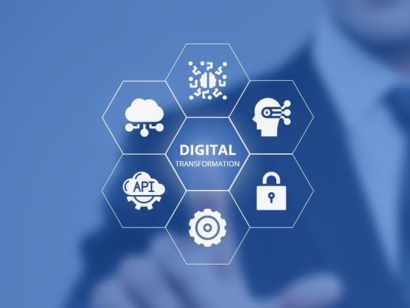
Our strategy is built on strengthening the core digital foundation of a brand while unlocking scalable revenue systems. We begin with a deep diagnosis of your value chain, customer journeys, tech stack, and data flow to identify the most critical growth levers. With these insights, we modernize your technology infrastructure unifying eCommerce, CRM, CDP, marketing platforms, and analytics so your business operates as one connected ecosystem. We then enable intelligence and automation through AI-powered workflows, personalized customer journeys, predictive analytics, and business process automation to drive efficiency and profitability. Finally, we embed long-term enablement through structured change management, training, and governance so your teams confidently adopt new systems and sustain growth.
Our strategy focuses on:
It’s the structured process of modernizing your tech stack, data, and processes so your brand can deliver better customer experiences, automate more of the work, and make smarter decisions — all tied to revenue and profitability goals.
Typical IT projects focus on installing tools. Our Digital Transformation work starts with business outcomes (growth, margins, CX) and works backwards to define the right architecture, integrations, workflows, and adoption plan.
It depends on your starting point and scope. Some projects (like analytics or martech integration) can show visible impact in 8–12 weeks, while deeper transformations (across eCommerce, data, and AI) may run 6–12 months with phased rollouts
Not necessarily. In many cases, we optimize and integrate what you already have, replacing only what’s clearly holding you back. The goal is a cohesive, efficient stack — not buying more software.
We collaborate closely with your leadership, tech, marketing, and operations teams, as well as external agencies. Our role is to align everyone on a unified roadmap, set up the right systems, and ensure everyone knows how to use them.